
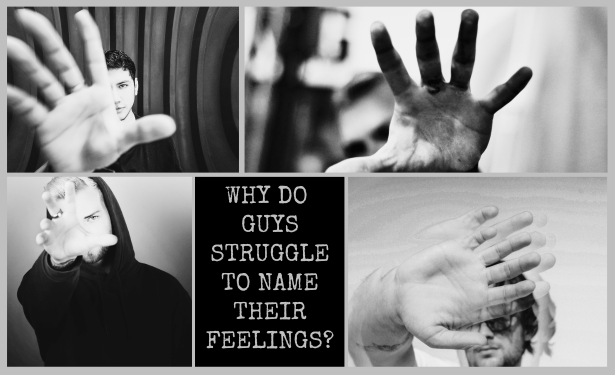
WHY DO GUYS STRUGGLE TO NAME THEIR FEELINGS? (and why is it a male thing?)
Date: Wednesday 03 Dec 2025
Have you ever felt completely stuck when someone asks, "How are you?"
Maybe you know you feel something, but the only words that come out are "fine," "stressed," or "angry." If you regularly struggle to pinpoint the difference between vague anxiety, true sadness, or just exhaustion, you've run into a common emotional roadblock.
There’s a term for this difficulty in processing feelings: Normative Male Alexithymia.
Alexithymia isn't about not having emotions; it is defined as a struggle to identify, differentiate, and articulate feelings. It represents a core deficit in the cognitive processing of emotions.
Why Is This a "Male" Problem?
This condition is disproportionately observed in men because it is fundamentally linked to culture. The "normative" part means it is reinforced by sociocultural conditioning that actively discourages emotional expression. Traditional masculinity ideologies often valorise stoicism and deem vulnerability-associated emotions—such as sadness or fear—as incompatible with being a man.
This pressure leads to an "externally oriented thinking style," in which men prioritise tangible, external realities (such as work, goals, or status) over deep internal emotional experiences. While you might experience heightened physiological stress or arousal, you lack the linguistic tools to interpret these sensations, resulting in emotional inaccessibility.
The Path to Emotional Agency
The critical insight is that this is a learned behaviour, not an innate flaw. You can unlearn it.
We will explore how interventions like the Alexithymia Reduction Treatment (ART) are specifically designed to dismantle these cultural barriers and build emotional skills. ART utilises techniques like "affect labelling" to help you assign precise linguistic descriptors to your emotional states, essentially teaching you the vocabulary needed to bridge the gap between how your body feels and what your brain recognises.
As leading experts assert, “teaching men to name their emotions is not just a therapeutic tool; it’s a cultural intervention”— it is a powerful reclamation of emotional agency.
Read on and learn from our in-depth research, comprising three articles and an infographic/video on how challenging these entrenched narratives can lead to greater emotional fluency and fundamentally redefine what emotional strength looks like. 👇
